Breaking the Stigma: Why FASD Demands More Than Just Awareness

As a parent who raised a child with a disability, I know firsthand the feelings of exhaustion and helplessness that shapes our daily reality. When my son was diagnosed with autism, the hardest part wasn’t his diagnosis. It was realizing I had to raise him in a world that saw his limitations rather than his potential. 

Like every parent, my wish was simple: for my child to be accepted, to grow, and to thrive alongside his peers. But back in the 1980s, children with disabilities were often segregated from their peers, and programs would routinely turn us away because they “weren’t equipped” to support him. I spent countless sleepless nights researching, advocating, and fighting for my son’s fundamental right to simply belong. 

Things have progressed since then, but what I learned, and what drives my work now, is that the barriers our children face aren’t inherent to their disabilities. They are constructed by systems that haven’t learned to see ability within difference. 

This experience has given me deep empathy for parents of children with Fetal Alcohol Spectrum Disorder (FASD). In addition to living with the daily realities of supporting a child with a lifelong brain injury, these families also face the weight of the stigma and judgment attached to the disability— a burden that compounds their isolation and exhaustion. 

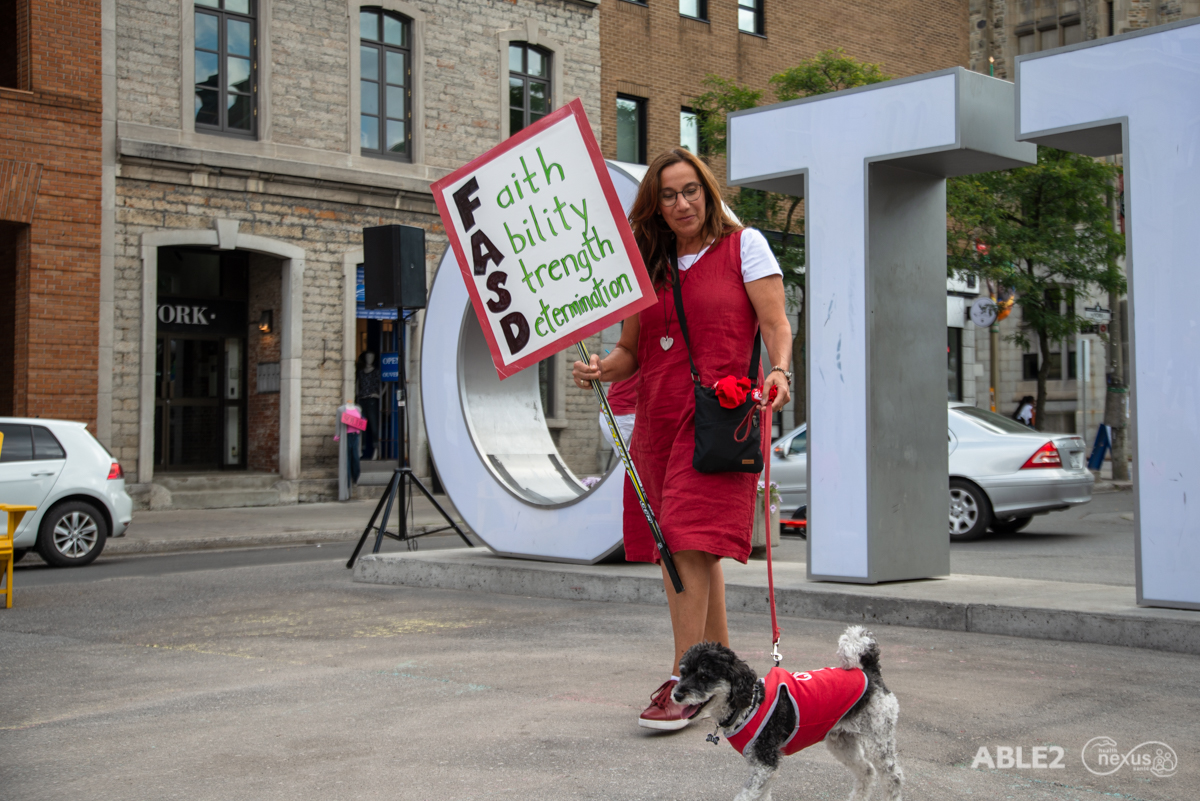
FASD is a brain-based disability resulting from prenatal alcohol exposure, impacting critical executive functions including memory, learning, judgment, decision-making, among others. (Canada FASD Research Network) It affects over 1.5 million Canadians, but many remain undiagnosed, hidden by stigma and misunderstanding. Unlike other disabilities, FASD carries the additional judgment towards birth mothers, unfounded assumptions about choice, and misconceptions about prevention that create shame where there should be support, silence where there should be advocacy.

The consequences are devastating. Parents find themselves navigating systems designed for other disabilities, working with well-meaning professionals who lack FASD-specific knowledge. Their children’s unique needs— the distinct ways they process information, respond to environments, or regulate emotions— are often misunderstood as defiance, manipulation, or poor parenting. And when these young people age out of social services at 18, often without proper supports, they face increased risks of substance abuse, homelessness, and criminal justice involvement. 

The economic impact is also staggering at $1.8 billion annually in Canada. But the human cost is immeasurable: families fighting to be understood, young people struggling to fit into a world that has made no space for their way of being. 

In recognizing this gap and the costs of ignoring it, ABLE2 launched the Fetal Alcohol Resource Program in 2015 in partnership with Kids Brain Health Network (KBHN), the Children’s Aid Society of Ottawa, and CHEO to provide support to people of all ages with FASD and their families. The goal was simple but urgent: provide specialized, evidence-based support to people with FASD and their families, while building the knowledge of service providers across sectors. 

Since then, we have seen what becomes possible when stigma is replaced with compassionate understanding. Families who once felt isolated now have robust networks of support. Educators, justice workers, healthcare providers, and social workers trained by FARP bring new insights, empathy, and evidence-based strategies to their work. And most importantly, individuals with FASD once dismissed as “non-compliant” or “difficult,” are finally being recognized for what they have always been: people with unique needs, considerable strengths, and the right to thrive.

I was privileged to eventually find the support that helped my son thrive. Today, he is supported to live the life he wants, and contributes meaningfully to his community. But I carry the sober awareness that this outcome isn’t available to every family, and I stand in solidarity with parents who simply want their children to thrive, to have meaningful and fulfilling lives, and to belong without condition.

September marks FASD Awareness Month, with this year’s powerful theme: “Everyone Plays A Part: Take Action!” I want to challenge all of us, as individuals, professionals, and community members, to move far beyond the comfortable realm of awareness, toward the work of compassionate understanding and systemic change. 

That means recognizing FASD as the complex, lifelong neurological disability that it is. It means training professionals across sectors in FASD-informed approaches that honour both challenges and capabilities. Building communities that offer practical support without judgment, resources without shame. Most critically, shifting our collective narrative from blame to shared responsibility, acknowledging that creating inclusive, supportive environments isn’t just good policy or compliance, it’s a moral imperative. 

Every child deserves to be seen not through the narrow lens of their challenges, but through the promise of their potential. Children with FASD aren’t ‘difficult’ and the question is not whether these children can succeed— it’s whether we’ll finally build the supports that allow them to succeed. 

Beyond September, I invite you to play your part for families caring for individuals with FASD. Listen to their stories with empathy. Advocate for FASD-informed training in your workplace and community. Support policies that recognize FASD as a disability deserving of accommodation and support. Challenge stigma wherever you encounter it.

When we choose understanding over judgment, support over stigma, and action over awareness alone, we don’t just change outcomes for individuals with FASD, but we truly become the inclusive, compassionate society we claim to be.

Published by

Heather Lacey

Experienced Non-Profit Executive Director

Read Heather’s other articles here

Systems Designed without Disability in Mind—And It Shows

As Executive Director of ABLE2, I see every day how systems that were never designed with disability in mind create unnecessary barriers. People wait months, or even years, for basic supports. Programs are underfunded, social services are stretched thin, and accessibility is often treated as an afterthought, available only to those who know to ask. Charities like ours step in where systems fall short, but we too, are underfunded and overstretched. The result? People who simply want to belong, pursue their passions, and live meaningful lives hit barrier after barrier.

I recently came across a LinkedIn post by Edmund Asiedu who said “You could become a person with a disability before this year ends.” This is a hard truth we don’t talk about enough. Disability can happen to anyone, at any time. And when it does, no one should have to fight for access, dignity, or inclusion.

Building on Edmund’s point, ask yourself: if you knew disability was going to be part of your future, would it change how you think about public spaces, workplaces, transit systems, or digital platforms? Would you demand programs and services that open doors instead of closing them? Would you demand full accessibility, not someday, but today?

This is the reality for nearly 8 million Canadians living with disabilities, and it could be yours too. Accessibility is not just about ramps or captions. It’s about equity. It’s about designing systems, spaces, and policies that work for everyone from the start. Think about curb cuts on sidewalks built for wheelchair access, but equally useful for parents with strollers, delivery workers, travellers with rolling luggage, and seniors. Inclusion benefits everyone.

We cannot keep patching the gaps in systems. We need to redesign them from the ground up. That means adequately funding disability programs, streamlining access to services, embedding accessibility into every policy and product, and including people with disabilities at every decision-making table.

At ABLE2, lived experience drives everything we do. People with disabilities sit on our Board. Program users shape our events and advocacy efforts. Over the years, we’ve seen that when accessibility is built in from the start, barriers come down, and everyone is empowered to thrive, advocate for themselves, and feel a sense of belonging.

Imagine a world where nobody has to ask to be included, because accessibility is already built in from the start. 

We don’t need to wait until disability happens to us or our loved ones. We can build better systems, spaces, and supports now. Inclusion is not a favour to anyone. It’s a shared responsibility and the smartest investment we can make for our future. 

If you knew disability was going to be part of your life tomorrow, what would you change today?

Published by

Heather Lacey

Experienced Non-Profit Executive Director

Read Heather’s other articles here

The Power of Disability Pride and Why It Matters 

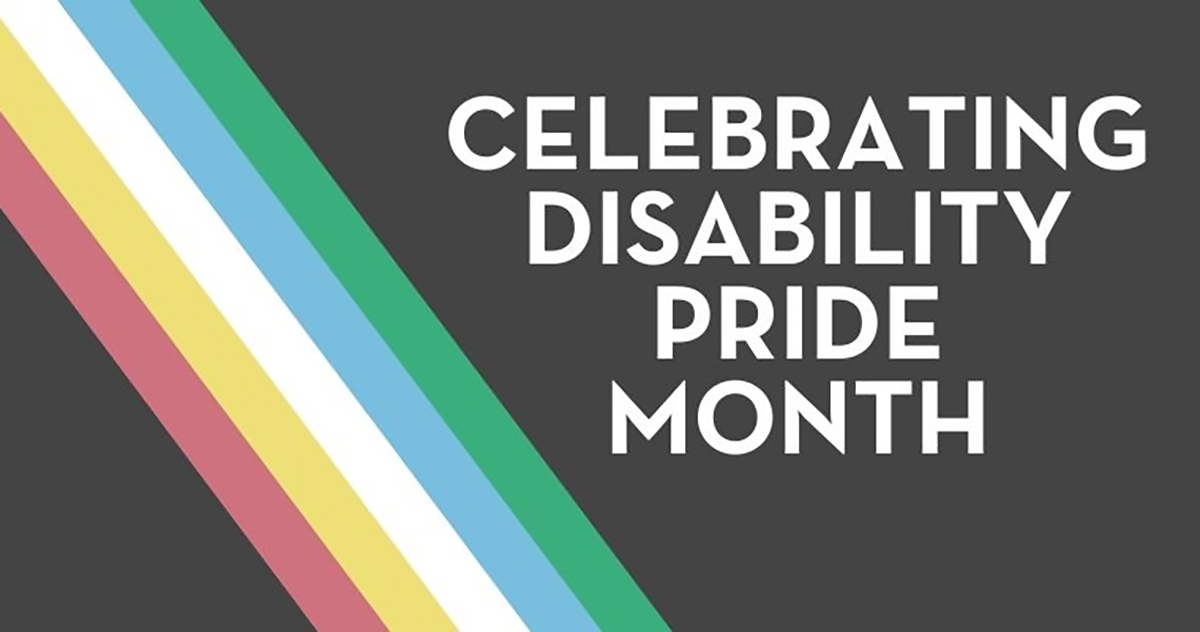
Every July, we celebrate Disability Pride Month to honour the history, culture, and contributions of the disability community. The celebration traces its roots to 1990, when the Americans with Disabilities Act (ADA) was signed into law. This landmark legislation was a hard-won victory in the fight for civil rights, accessibility and inclusion. Since then, Disability Pride has evolved far beyond policy. It has become a powerful movement—one that confronts stigma and reclaims disability identity with pride.

For too long, disability has been framed through the lens of limitation: something to be fixed, pitied, or overcome. Disability Pride flips that narrative. It is not about inspiration or sympathy. It’s saying, “We belong— not in spite of our disabilities, but with them.” It affirms that disability is not a flaw, but a vital part of human diversity. And in a world that often devalues it, to be proud of a disabled identity is a radical act of resistance. It challenges ableism at its core and reclaims space that has too often excluded them. 

Disability Pride offers a vision for the kind of world we are working to build. A world where accessibility is the standard, where disabled leadership is expected, and where interdependence is valued. Disability Pride is a call to action for systems, institutions, and individuals to move beyond performative inclusion, toward real, structural change.

At ABLE2, we believe real inclusion demands more than policy statements and good intentions. It requires action that is informed by people with lived experience. That is why we ensure people with disabilities are meaningfully involved in shaping our programs, services, and strategy. From our Board of Directors to advisory committees and event planning teams, their voices are not just included but are leading the conversations. 

We put this commitment into action through all our programs and services that are built with inclusion at their core. For instance, the Matching Program combats social isolation by fostering genuine one-to-one friendships between people with disabilities and community volunteers— relationships rooted in mutual respect and belonging. Through the Reach Legal Referral Services, we ensure that individuals with disabilities can access justice and assert their rights.

Inclusion is our operating principle. Every program, policy, and conversation begins with a question: How are we building an inclusive community where every person is seen as able, important, and valued? Because without intentional action, inclusion remains a promise unfulfilled.

You too can have a hand in building a more inclusive world. Here are a few ways to take meaningful action:

  • Support disability-led initiatives. Invest your time, resources, and platforms in organizations run by and for people with disabilities. 
  • Educate yourself. It’s not the job of people with disabilities to educate everyone. Take initiative to read books, watch documentaries, and follow disability advocates online.
  • Audit your spaces. Identify inaccessible practices and methods in your workplace or community, whether it’s physical, digital or cultural. Who is left out and why? Actively advocate for change.
  • Speak up against ableism. Silence can be complicity. If you hear ableist jokes or see discriminatory behaviour, speak up respectfully, even when it’s uncomfortable.
  • Amplify voices. Listen and ensure that people with disabilities are not only invited to the table, but empowered to shape the conversation.

Being an ally requires humility, listening, and a commitment to equity. You will not always get it right, but staying open to feedback and continuing to learn is what makes you a true ally.

As efforts around Diversity, Equity, Inclusion, and Belonging (DEIB) continue to be threatened, it’s more important than ever to hold the line. Disability Pride matters because inclusion is not a trend. It is a human right. The fight is far from over, but we are not waiting for permission to be proud. The disability community is here, leading, creating, and thriving. 

This Disability Pride Month, let us move beyond all the talk and commit to action. How will you show up for the disability community?

Published by

Heather Lacey

Experienced Non-Profit Executive Director

Read Heather’s other articles here

PRIDE in Every Shade: Honouring the Intersection of Disability and 2SLGBTQ+

June marks PRIDE month, a time to celebrate identity, visibility, and the fundamental right for everyone to live openly, fully, and freely. But beyond the colourful celebrations and hard-earned milestones, lies a quieter, more complex truth: for many, PRIDE is not just a celebration— it’s a daily act of resistance and survival.

That is the reality for many of the 2SLBGTQ+ individuals living with disabilities. According to a 2022 report by Statistics Canada, there are over 700,000 Canadians over the age of 15 who identify as 2SLBGTQ+ and live with one or more disabilities. These individuals sit at the intersection of multiple marginalized identities and barriers, which are not merely additive, but rather amplified by stigma, systemic gaps, and a lack of adequate support. Imagine living in a world that not only questions your capabilities but also invalidates your identity. 

People with disabilities have long navigated systems that were not designed with their needs in mind. Add to that the realities of 2SLBGTQ+ identities, where homophobia, transphobia, and erasure persist— the risk of isolation, harassment, and violence increases exponentially. Research shows that this population is more likely to experience mental health challenges, be denied equitable access to services, and face victimization because of their identities. 

And yet, despite the obstacles, these individuals are not broken; far from it. They are self-aware, resilient, and often more in tune with what they need. Because they’ve had to fight for it. Their lived experience as 2SLBGTQ+ with disabilities equips them with a unique kind of wisdom and strength. And that makes them not only survivors, but leaders in the movement for inclusion.

Still, as DEI efforts face growing scrutiny, we must remain vigilant. A troubling narrative is taking hold; one that suggests equity threatens merit, or that inclusion is optional. We cannot afford to move backward. Not now. Not ever. Inclusion is not a trend. It is respecting the fundamental rights of everyone, including 2SLBGTQ+ individuals with disabilities. It is foundational to a just and equitable community. 

At ABLE2, we are proud to stand by the 2SLBGTQ+ community, especially those living with disabilities. We work to provide them with tools, resources, and tailored support to live with dignity, autonomy, and confidence. Through our Reach Legal Referral Services, we connect individuals to over 200 volunteer legal professionals who help them challenge discrimination and assert their rights, whether in employment, healthcare, housing or education. ABLE2’s mission is to empower people to advocate for themselves, and live fuller, safer, and more meaningful lives. 

As we celebrate PRIDE month, I challenge us all to go beyond rainbow logos and standard written policies. To be true allies, we must listen and amplify the voices of those whose identities are too often pushed to the margins. Learn and lead with intention. Because inclusion must never be optional, nor performative. It must be woven into how we govern, support, and show up for one another. 

To fellow allies, what are you doing today to ensure that those at the margins are not only seen, but also heard, included, and celebrated? 

Published by

Heather Lacey

Experienced Non-Profit Executive Director

Read Heather’s other articles here

Position Statement on the Reduced Cabinet Roles on Diversity, Inclusion and Persons with Disabilities

ABLE2: Support for People with Disabilities acknowledges the complex and challenging environment in which the newly elected federal government is operating. We recognize the need for thoughtful and efficient governance in times of economic and social uncertainty. However, we are deeply concerned by the decision to eliminate dedicated ministerial roles for diversity, inclusion, and persons with disabilities from the federal cabinet.

For the 27% of Canadians living with disabilities, the absence of a dedicated cabinet voice sends a message of deprioritizing critical issues that affect millions of Canadians. For decades, people with disabilities have advocated to be seen, heard, and meaningfully included in the decisions that affect their lives. In this moment of change, it’s more important than ever to reaffirm that inclusion matters, and that their voices continue to have a place at every decision-making table.

Inclusion is foundational to a healthy democracy and a strong economy. Canadians with disabilities contribute meaningfully to every sector and deserve to see their needs and rights reflected in the highest levels of decision-making. As the disability community has long asserted: Nothing about us without us.

We urge Prime Minister Carney and the federal government to reaffirm their commitment to inclusion—not only through policies, but through visible leadership and dedicated accountability. We call on this government to ensure that the rights, experiences, and contributions of people with disabilities are meaningfully represented and prioritized across all departments and levels of government.

Canada cannot afford to lose momentum on equity and inclusion. Progress must move forward—not backward.

At ABLE2, we remain committed to building communities where every person is seen as able, important, and valued. We call on our government to do the same for Canada.

National AccessAbility Week Is a Call to Act, Not Just Reflect — How Will You Lead?

Imagine navigating a world where every door is closed to you—not because you lack the ability, but because the world was not designed with you in mind. I recently came across an ad by a French electric company that powerfully illustrated this reality. It flipped the script, showing a world where people without disabilities faced barriers at every turn. While the video poignantly highlights the physical obstacles, its deeper message speaks to something more profound: the daily exclusion and isolation that people with disabilities continue to experience in spaces and systems built without them.   

As we mark National Accessibility Week on May 25 to 31, it is a timely reminder that accessibility is more than just ramps, automatic doors, or designated parking spots. While those physical accommodations are essential, true accessibility and inclusion mean creating environments— physical, digital, and social, that allow full participation for everyone. And to achieve that, we must address the biggest, and often invisible, barriers – stigma and attitudinal bias.

Too often, people with disabilities are met with assumptions about what they can or cannot do or made to feel like they are a burden for requesting accommodations. This is ableism, a form of discrimination rooted in the belief that people with disabilities are inferior or need to be ‘fixed. (The Canadian Encyclopedia, 2023) In my experience, it remains one of the most significant barriers to true inclusion, precisely because it so often goes unnoticed and unchallenged. It does not come from a place of malice, but it is pervasive— and it shows up everywhere.

Ableism can notoriously influence the very systems we move through every day. It can influence hiring practices when candidates with disabilities are overlooked because of assumptions about their capabilities. It is embedded in policies that treat accessibility as an optional add-on feature rather than a basic right. It dictates the design of public spaces that still fail to accommodate diverse needs, and it colours everyday interactions when people are spoken over, ignored, or pitied. When left unchallenged, these biases create environments where people with disabilities are systematically excluded— not because of inability, but because the systems and spaces were not built for them in the first place. This is what happens when people with disabilities are not at the decision-making table. And when exclusion becomes embedded in our systems and culture, we do not just deny opportunities to those individuals— we rob our communities of their valuable insights, talents, and contributions.

Creating inclusive communities is a collective responsibility, and leadership at every level has a crucial role to play. Leaders must champion inclusion by moving beyond statements and into strategy.  This means ensuring people with disabilities are actively involved in shaping decisions that impact their lives. It is about moving beyond compliance and continuously asking: Who might be left out of this space, conversation, or opportunity, and how can we change that?

At ABLE2, we have long believed that it is not enough to talk about inclusion— we must actively create it. And we have taken this to heart. We have redefined how we deliver programs by adapting to the ever-evolving needs of the people we support and continuously improving our services to address the barriers they face. 

When hiring staff, we look for the best person and provide any requested accommodation and the physical environment is designed to be accessible to all.

Our Matching Program, which pairs people with disabilities with volunteers, does not just foster friendship— it shifts perspectives. Our volunteer Allies gain an ingrained understanding of the everyday realities their Friends experience, breaking down assumptions and building authentic community connections. 

Through our Reach Legal Referral Services, we connect individuals with disabilities to a roster of 200+ volunteer legal professionals, actively dismantling the systemic barriers and helping people assert their rights in challenging discrimination and stigma. 

Many of our events involve people with disabilities in the planning process and we incorporate several accommodations into them too, such as quiet areas, personal support attendants, accessibility teams and live closed captioning. 

At the leadership level, we are proud to have people with disabilities serving on our Board of Directors, ensuring their lived experiences shape our strategy, challenge our assumptions, and keeps us accountable to the communities we serve. That is how real, lasting inclusion is built.

During National AccessAbility Week, and in every moment that calls for reflection— let us take an honest look at our own assumptions and behaviours. Challenge ableist language in your conversations. Revisit your hiring practices, physical and digital spaces, outreach efforts and continue to ask yourselves: Who might be left out and how can we change that? And if you are in a leadership role, lead with inclusion at the forefront. Make sure people with disabilities are not just consulted but meaningfully involved at the decision-making table, helping shape the spaces, policies, and communities they live in.

So, as we envision a world where accessibility is a given, not an afterthought, I will leave you with this question: What role will you play in making that vision a reality? 

Published by

Heather Lacey

Experienced Non-Profit Executive Director

Read Heather’s other articles here

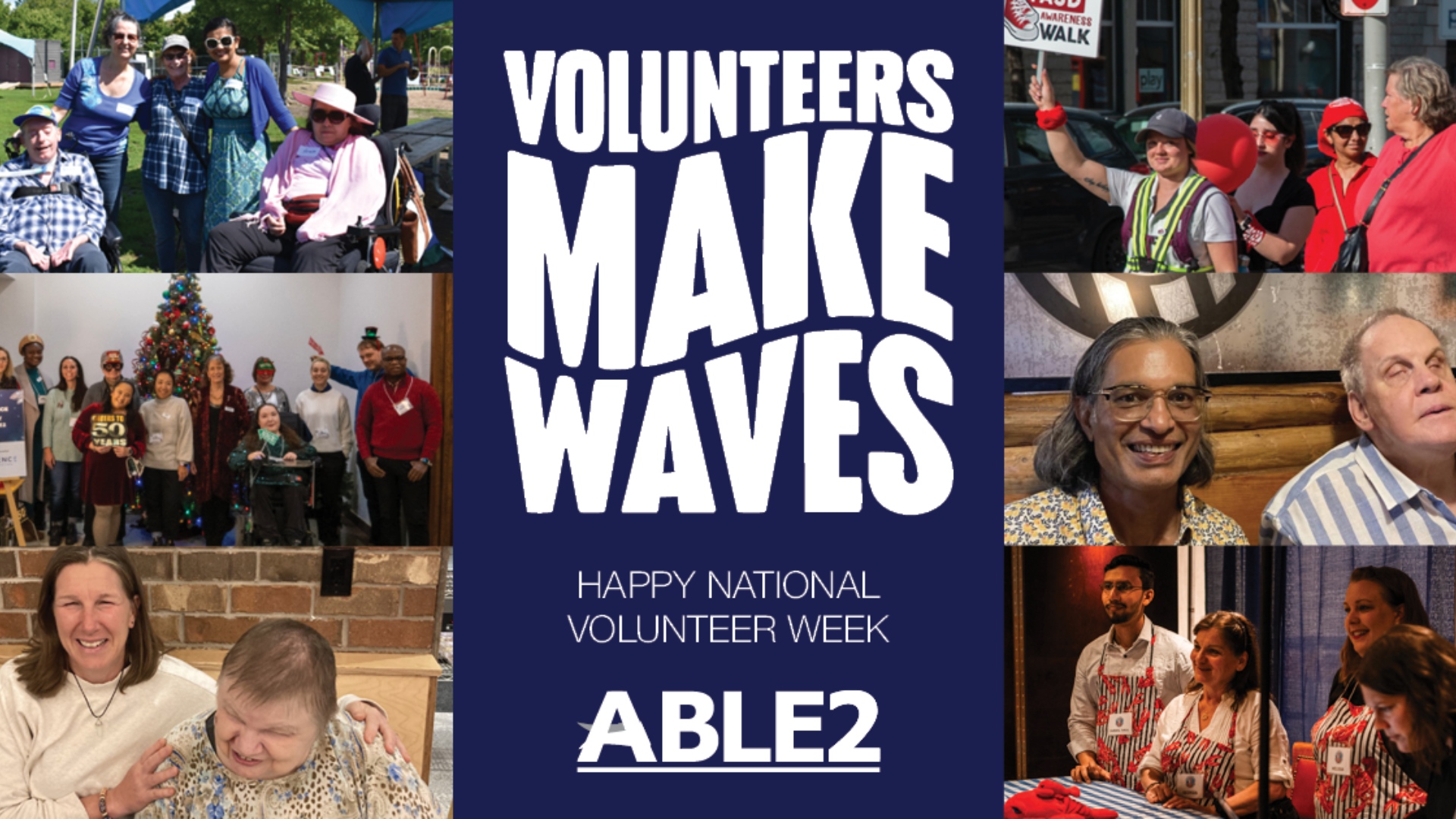
Celebrating Volunteers: Making Waves of Change in Our Communities

Fifty years ago, ABLE2, formerly known as Citizen Advocacy Ottawa, was founded on a simple yet powerful idea: community is built by people who care. Inspired by a movement in the U.S. that saw volunteers supporting individuals transitioning from institutions to independent living, our founder, David Hall, mobilized a network of community members who believed in inclusion, belonging, and the power of human connection. Today, ABLE2 continues to thrive because of the dedication of volunteers who believe everyone deserves to live lives of meaning and joy.

At the heart of this mission is ABLE2’s Matching Program, which fosters one-on-one friendships between volunteers, or “Allies,” and people with disabilities, or “Friends.” Over the years, we have seen the transformative change these intentional friendships have— people with disabilities expanding their social connections, gaining confidence, increasing their self-esteem, improving their overall mental and physical health, and a better appreciation of life. Over time, these matches become more than just volunteer-service user relationships; they become life-long friends and sometimes consider each other as family. When people with disabilities have someone who chooses to stand by them— not because they are paid to do so, but because they want to— it enables them to feel included, feel less isolated and live a life that means something to them.

And the impact doesn’t stop there. Empowered by these social connections, many of our Friends become advocates and volunteers themselves. Mark, for example, has been involved with ABLE2 for years and now spends his time volunteering at a food bank and supporting ABLE2’s events. His story is one of resilience and generosity, and while we celebrate his determination, we also recognize the role that community support has played in helping him realize his potential. This is the power of volunteerism— it’s a gift that keeps on giving. Each act of kindness sparks another, creating a chain reaction of generosity and inspiring others to pay it forward. Volunteers don’t just create ripples of change— they make waves. 

The impact of volunteerism at ABLE2 extends far beyond one-on-one friendships. It weaves through every part of our organization, strengthening our mission in ways big and small. When Reach Canada merged with ABLE2 in 2023, we expanded our capacity to support people with disabilities in accessing justice. Today, we work with more than 200 volunteer lawyers, paralegals, and mediators who provide free legal consultations, empowering individuals with disabilities to assert their rights, challenge inequities, and seek the justice they deserve. Volunteers also play a crucial role in our events, providing accessibility assistance so that every attendee can fully participate without barriers. Behind the scenes, a dedicated committee of volunteers works tirelessly to make our biggest fundraising event, Evening in the Maritimes, a success. And the backbone of the organization, our Board of Directors, who provide steadfast leadership, guiding ABLE2’s growth and strengthening our ability to serve even more people. 

Making a difference doesn’t require a formal title. Every act of generosity— whether offering a helping hand, advocating for others, or simply showing up for someone in need— has a profound impact. As Heather French Henry, a former Miss America and veterans advocate, once said, “Volunteering is at the very core of being human. No one has made it through life without someone’s help.” 

As we celebrate National Volunteer Week, we take this moment to express our deepest gratitude to the compassionate and kind individuals who volunteer. You are the heart of our community, and the driving force behind a stronger, more inclusive world. 

Happy National Volunteer Week!

Published by

Heather Lacey

Experienced Non-Profit Executive Director

Read Heather’s other articles here

The Overlooked Reality of Women with Disabilities 

International Women’s Day has always been about both celebration and action— honouring the achievements of women while acknowledging the inequities that still exist. The United Nation’s theme this year, “For ALL women and girls: Rights. Equality. Empowerment,” is a call to value the full participation of all women and girls, challenge discrimination and exclusion, and to empower the next generation as catalysts for change. It is also a powerful reminder that inclusion cannot be selective. If we are not advocating for all women— including women with disabilities – then we are leaving too many behind.

While we have made great strides toward gender equity in Canada, the reality remains that women continue to face systemic barriers in workplaces, leadership, and economic security. According to the World Economic Forum’s Global Gender Gap Report 2024, Canada ranks 25th globally in gender wage disparity. Statistics Canada reports reveal a 12% gender wage gap among paid workers aged 20 to 54 years. For women with disabilities, the barriers extend far beyond wage gaps. 

Women with disabilities are also pushing against deeply rooted systemic ableism that limits access to employment, leadership, and financial independence. Statistics show that 2.1 million Canadian women with disabilities experience limitations in daily activities due to barriers in accessibility, discrimination, and a lack of accommodations. 

The result? Too many women with disabilities are placed in roles that do not reflect their skills and potential, subjected to lower wages, and in some cases, denied job interviews outright due to their disability. And even in workplaces that claim to prioritize Diversity, Equity, and Inclusion (DEI), hiring practices still exclude rather than empower. 

We need to challenge this head-on. In my previous blog entry, I talked about DEI in workplaces and how it is not about checking boxes or hiring based on identity alone; it is about ensuring that all qualified individuals have fair access to opportunities. That means removing systemic hiring barriers, expanding recruitment efforts, and ensuring that accommodations are available so that women with disabilities are not just considered, but valued. 

The intersectionality of gender and disability presents an even more complex landscape. According to the United Nations, women with disabilities are two to three times more likely to experience violence and significantly underrepresented in decision-making roles. They also face limited access to education, healthcare and social services. (BMC Women’s Health, 2021)

And when these challenges intersect with race, Indigenous identity, LGBTQ+ status, or socioeconomic background, the layers of discrimination multiply, creating even steeper barriers to success. 

Yet, despite these challenges, women with disabilities continue to lead, break barriers, and drive change. Rabia Khedr, Queen Elizabeth II Diamond Jubilee Medal Awardee and National Director of Disability Without Poverty, a racialized minority and living with a disability, she has dedicated her life’s advocacy to ensure the voices of Canadians with disabilities are heard. Senator Chantal Petitclerc, Canada’s Chief Accessibility Officer Stephanie Cadieux, and Canadian Disability Hall of Famer Tracy Schmitt are just few of the thousands of women with disabilities excelling in their fields and shaping a more inclusive Canada. 

When women with disabilities are given equal access to employment, leadership, and decision-making roles, they don’t just succeed— they transform their communities and industries. 

But it’s not enough to talk about inclusion— we must actively create it. It is our collective responsibility to call out discriminatory hiring practices and workplace policies that limit opportunities for women with disabilities, advocate for accessibility as a standard, not a special request, and to amplify the voices and achievements of women with disabilities— so that ALL women and girls have rights, equality, and empowerment. 

At ABLE2, we are committed to putting these principles into action. We operate in a hybrid work model to allow our team including women-identifying staff and volunteers the flexibility to maintain a healthy work-life balance. Our office is designed with adaptive furniture and accessible facilities, as well as accommodations during the hiring process, so that everyone has the means to participate and contribute to our mission and vision. 

Disability is not a limitation. Barriers are. In celebrating International Women’s Day, it’s time we stop asking women with disabilities to adjust to a system that wasn’t built for them—and start rebuilding that system to work for everyone.

True inclusion starts with action. How is your workplace or community ensuring that women with disabilities are not just included, but fully empowered? What changes do you believe rare still needed? Share your thoughts in the comments below. 

Published by

Heather Lacey

Experienced Non-Profit Executive Director

Read Heather’s other articles here

Ain’t No Mountain Too High for The Unstoppable Tracy Schmitt

If you have heard the phrases Para-skiing athlete, climbed the Himalayas, and World Cup Sailor strung together, then you probably already know the powerhouse of a woman that is Tracy Schmitt. Tracy is a world-renowned motivational speaker, a best-selling author, Corporate Consultant, and a decorated athlete. She was inducted into the Canadian Disability Hall of Fame in 2019, and was honoured with the Empowered Woman of the Year Award by the International Association of Top Professionals (IAOTP) in 2023. She is an unstoppable force who knows no limits, and with her long list of accomplishments, there certainly isn’t a mountain high enough for Tracy!

Becoming lim(b)itless

Born a four-way amputee, Tracy faced a world quick to impose limitations. Doctors advised to put her up for adoption, but her parents chose a different path. 

Tracy vividly remembers her first day of kindergarten when the principal turned her away, claiming the 1970s school was not equipped to meet the needs of children with disabilities. Her mother, calm and kind, just simply asked “How come?” Hearing the concerns, she counter offered; “Can we just try for a week?” Before dropping off, she looked Tracy in her eye and said, “Tracy… it’s important that everybody is included, including you. Nobody left behind.” At five years old, Tracy didn’t fully grasp the significance of those words, but they would become her guiding principle, shaping her into the unstoppable woman she is today.

By recess, the principal couldn’t find Tracy on the playground and assumed she was struggling with her shoelaces or the restroom. The reality? Tracy was busy tying the shoelaces of all 30 of her classmates because none of them knew how. Tracy stayed in that school, and that day’s lesson would profoundly impact her life and career. “When the principal said no, it was because he didn’t know,” Tracy reflects. “Each and every single one of us is a valuable contributor… a person with visible or invisible disability, everyone.”

Don’t Take ‘NO’ For an Answer

Even as a decorated athlete, scaling the Himalayas, and sailing a 110-foot ship against able-bodied men, Tracy still encounters moments of ignorance that highlight how society often underestimates people with disabilities. On her usual morning drive-thru tea run, as she drove up to the window to pay and grab her order, the staff exclaimed, “Oh no,” seemingly in disbelief that a lady without hands or legs was driving a vehicle and ordering tea. This interaction struck a chord for Tracy, who admits “That was the first time I truly felt like a four-way amputee.” 

“Reframe,” Tracy advises when faced with moments like this. “Take a moment, take a deep breath, look them in the eye, and declare yourself.” With a smile, she told the drive-thru staff “Hi, I’m Tracy! It’s okay. I can take that.” Moments like these, she says, stem from assumptions, not malice. “When people say “no”, it’s because they don’t know,” Tracy emphasizes. Her TEDx talk “NO to KNOW: How to Change Your Outlook on Ability” challenges these narratives and encourages its audience to shift focus to possibilities. 

An Advocate, Educator, and Leader

Her strong mindset in reframing challenges into opportunities has propelled her to remarkable heights. Her love for storytelling and making connections has led her to teach children in other countries like Mexico, Jamaica, and Uganda. Passionate about creating conversations on disarming limiting beliefs and focusing on abilities, Tracy quickly gained an engaging audience. This eventually led her to a calling in motivational speaking across the world. Today, Tracy is a most sought-after international speaker and has shared the stage with notable figures like Dr. Phil, John Travolta, Mel Gibson, Mark Wahlberg, and more. Named as the #1 Female Transformational Leader by leadership guru John Maxwell, she remains a vocal advocate for everyone everywhere.

“It’s not about being inspiring for existing,” Tracy says, “it’s about what we are able to build together when we focus on taking action.” Beyond speaking engagements, Tracy is also an international best-selling author, with her book “Unstoppable You: Exceed Uncertainties, Embrace Possibilities, Earn Independence (Cracking the Lim[b]itless Secret).

Embracing Possibilities, Living Without Limits

As Tracy talks about overcoming obstacles, she shares her philosophy: “When we don’t know how, lean into fear. Then get started. We didn’t know how I would ski, but even then, I believed I could do it. I embraced the possibility, even when I didn’t know how at first,” she says. 

Tracy’s vision is clear: a world where everyone is empowered to embrace possibility, earn independence, and create solutions that work for them. Her journey serves as a testament to the value of inclusivity and the transformative power of believing in oneself. 

As we celebrate International Women’s Day, we recognize Tracy Schmitt as a powerful example of what’s possible when women are empowered to lead, innovate and break barriers. Her achievements highlight the incredible heights women can reach when given the tools and opportunities to succeed. Tracy’s story is more than just overcoming limitations— it’s about embracing potential, driving change, and shaping a world where nobody is left behind. As Tracy puts it, “When I live a life of no excuses, I get to live a life of no limits.”

To learn more about Tracy or to get in touch with her for speaking engagements, visit https://unstoppabletracy.com/meet-tracy/

The State of DEI and Why We Must Stand Firm 

In recent years, the concepts of Diversity, Equity, and Inclusion (DEI) have become essential pillars in shaping how organizations and communities create fair and welcoming spaces for everyone. These initiatives are not about exclusion or preferential treatment— it is about dismantling systemic barriers, expanding access to opportunities, and ensuring that every individual, regardless of race, gender, disability, or background has equal opportunities to participate and thrive.

Yet, recent developments in the US reveal a troubling backlash against these efforts. Despite significant strides to make programs and services accessible and inclusive to all, the current administration issued an executive order to end DEI programs. They argue that these initiatives lead to divisiveness and wasteful spending and undermine merit-based hiring practices. 

How can policies designed to make workplaces more welcoming and accessible be accused of creating discrimination? How does ensuring a diverse and inclusive applicant pool stand in the way of hiring the best person for the job? If anything, DEI ensures that the best candidate is not overlooked simply because they were never given access to the opportunity in the first place. This shift marks a stark contrast to efforts advancing equity and supporting underserved and unrepresented communities. 

DEI is about expanding, not excluding 

One of the biggest misconceptions about DEI in hiring is that it prioritizes identity over qualifications. When practiced correctly, DEI is about expanding the reach of job opportunities, not restricting them. For instance, instead of simply hiring from the same networks or universities where opportunities have historically favoured certain groups, inclusive hiring means ensuring job postings reach a broader audience, including underrepresented communities. It means making the hiring process accessible— offering accommodations such as screen readers, flexible interview formats, or alternative application methods for people with disabilities. 

True DEI is not about checking a box; it is about removing the barriers so that everyone has a fair shot at success.

A long fight for inclusion

February is also Black History Month, a time to reflect on the resilience and contributions of Black communities and the long fight for racial equality. While progress has been made, history reminds us that inclusion is never guaranteed. The same can be said for disability rights—people with disabilities are still fighting for accessible workplaces, equal hiring practices, and representation in leadership roles.

At ABLE2, we know firsthand that inclusion does not happen by accident—it happens by design. That is why our Board includes a representative with a disability, ensuring that lived experience informs the decisions that impact the community we serve. When diverse voices are part of decision making, we move beyond performative inclusion and toward real, lasting change.

Why we must push forward

The backlash against DEI is a reminder that progress can be fragile. When programs are scaled back or dismissed as unnecessary, we risk undoing years of hard work. For people with disabilities, this could mean fewer opportunities to access meaningful employment, reduced funding for accessibility initiatives, and limited representation in decision-making spaces.

Inclusion is not just about hiring—it is about belonging. When workplaces and communities commit to diversity, equity, and inclusion, they foster environments where everyone can contribute and thrive. The fight for justice—whether racial, gender, or disability-related—is ongoing, and we cannot afford to step back now.

Today, on World Day of Social Justice, it is vital to reflect on what these developments mean for the broader fight for inclusion— are we doing enough to create a society where everyone can participate and contribute? Are we actively removing barriers, or are we allowing old systems of exclusion to persist? 

As leaders, advocates, and members of the community, we all have a role to play in advancing inclusion. Here is what you can do:

  • Educate Yourself: Learn about the barriers that marginalized groups, including people with disabilities, face in accessing opportunities.
  • Advocate: Use your voice to champion policies and initiatives that promote equity and inclusion in your workplace, school, or community. Speak up against unjust practices that create barriers and exclude others. 
  • Engage: Foster safe spaces where people from all backgrounds can share their perspectives and experiences.

DEI is not just an initiative—it is a commitment to fairness and justice. We must push forward, ensuring that no one is left behind. Inclusion should be the standard, not the exception.

Let us keep the conversation going. What are your thoughts on the state of DEI today? How do we ensure that progress continues for all communities, including people with disabilities? I would love to hear your insights in the comments.

Published by

Heather Lacey

Experienced Non-Profit Executive Director

Read Heather’s other articles here