
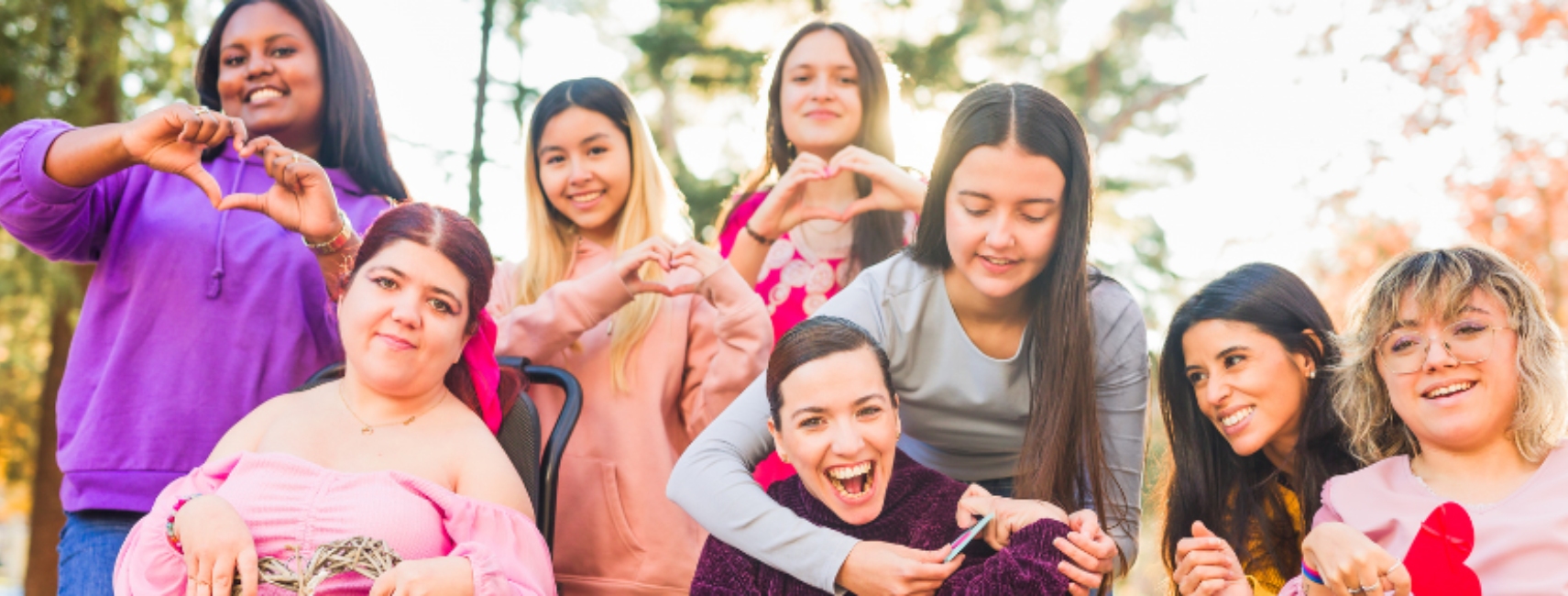
Advocacy has always been part of my life. As a mother to my son with autism, I’ve spent years pushing through systems not designed for families like mine. I’ve sat in rooms as the lone voice, fighting for his right to be included, and insisting that doors stay open when they close on us. Those experiences have shaped my career, my leadership approach, and my understanding of what real advocacy actually requires. And it has taught me that women are the strongest advocates in every space they occupy.
Women hold systems together while navigating barriers themselves. We are caregivers, organizers, problem-solvers, innovators. We build networks, create solutions, and support our families and communities, not only because we can, but because we must. So this year’s International Women’s Day theme, “Give to Gain,” resonates deeply. When women are given access, opportunity, and support, families gain. Communities gain. Organizations gain. Everyone gains.
But there is a group of women whose realities remain largely invisible in these conversations: women with disabilities. They face some of the steepest barriers of all, experiencing not only the gender wage gap and the disability employment gap, gaps that widen even further at the intersections of racism, poverty, and systemic exclusion. Women with disabilities hold just 0.3% of senior leadership roles in Canada, and only 59% of persons with disabilities are employed at all. These numbers make it clear that these aren’t individual shortcomings, but systemic flaws.
In my career, I’ve watched this play out: women shut out of workplaces that won’t accommodate them, talented leaders passed over because someone assumed disability meant inability, women with disabilities trapped in benefit systems that discourage financial capacity. And what’s frustrating is that we know we can change it, we’re just not investing enough to do it.
When we invest in women with disabilities through access, accommodation, opportunity, and trust, we gain far more than we give. We gain exceptional problem-solvers who’ve spent their lives navigating systems not built for them. We gain employees who demonstrate loyalty because meaningful employment isn’t something they take for granted. We gain perspectives that strengthen products, services, and workplace culture in ways homogeneous teams never could. And we gain communities that thrive when the people most marginalized are empowered to lead.
Talking about their realities is not enough. The true “give to gain” equation requires real, tangible investment. Real investment looks like designing flexibility and accommodation into workplaces as a standard, not a perk or afterthought. Real investment is expanding financial literacy and security initiatives that address poverty traps, benefit clawbacks, and the economic barriers unique to women with disabilities. Investment is normalizing accessible hiring practices to break down the barriers in the labour market. It’s providing real pathways to leadership and advancement, so women with disabilities can take on more leadership roles. And finally, committing to measurable equity, closing gaps in wages, employment, and unmet accommodation needs, and holding ourselves accountable for progress.
The return on investment is unambiguous. Research shows that advancing gender equality could contribute up to $150 billion to Canada’s GDP, and improving disability employment measurably increases productivity, stability, and overall workforce participation.
But beyond the economics, something more fundamental is at stake: when women with disabilities gain economic security, their families stabilize. When they gain employment, entire community narratives shift about who belongs in workplaces. When they gain leadership positions, they change what’s possible for the next generation.
We see this a lot in our work at ABLE2. We see mothers who, once supported, become fierce advocates for other families. We see women who gain financial skills turn around to mentor others navigating the same systems. We see employees who, when accommodated and trusted, grow into transformational leaders. These are not just anecdotes. These are real impacts of empowering women with disabilities.
And yet, society remains stuck in a cycle where women with disabilities must still fight for every opportunity, every accommodation, every dollar. We celebrate those who “overcome” barriers instead of committing to removing the barriers altogether. We offer programs that fill gaps, when what people need are systemic changes.
In celebrating women, I urge you to commit to actual investment in women with disabilities. Ask yourself: What are we giving that helps women with disabilities gain?
Because when women with disabilities have what they need to truly succeed, we all gain. The question now is simple: are we ready to invest like we mean it?
Published by
Experienced Non-Profit Executive Director